What is Vibe Science? 🧬✨
You know how "vibe coding" means describing what you want in plain English and letting an AI write the code? Vibe Science is the same thing but for bioinformatics — and it is, frankly, ridiculous how well it works.
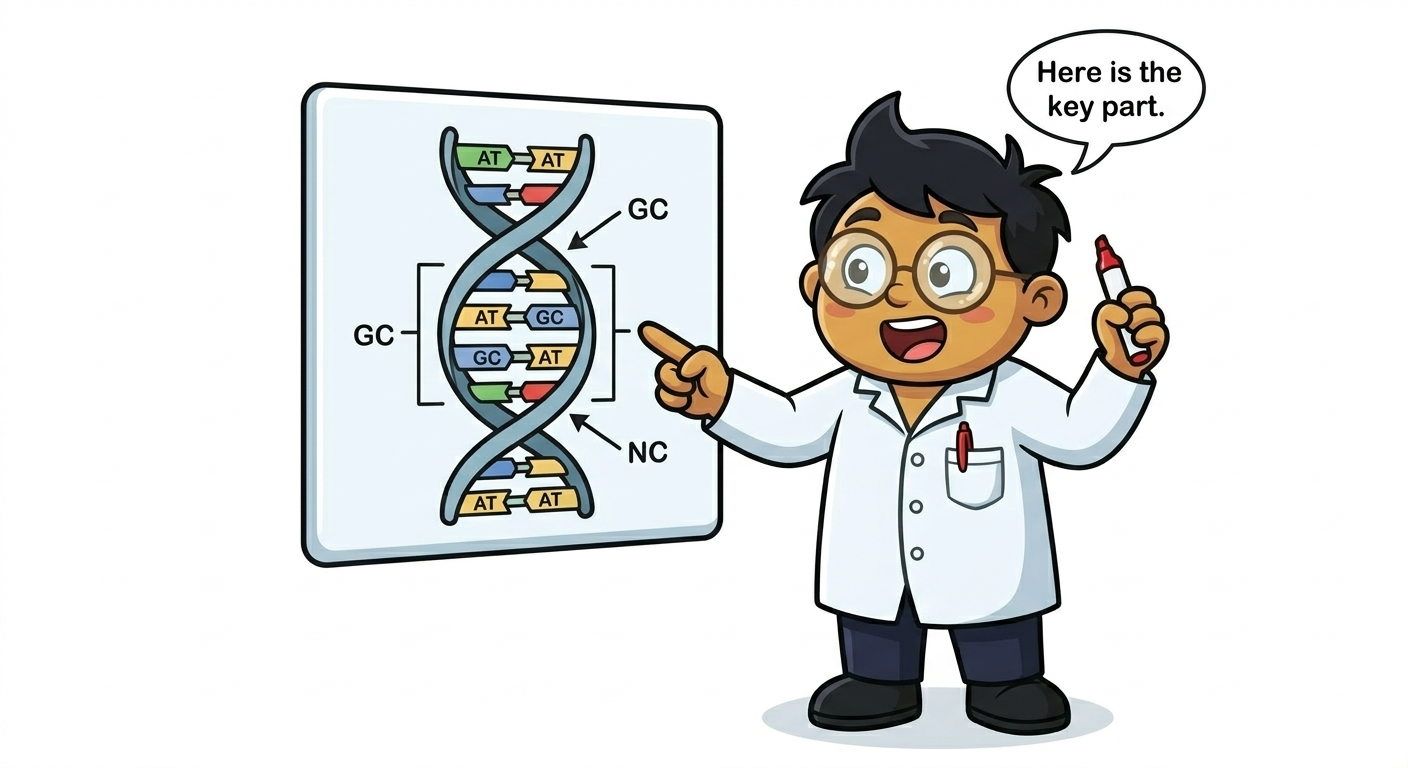
Hot take: The bioinformatics community spent 30 years arguing about the best aligner. Claude will write you a wrapper for all of them in 4 seconds and ask which one you actually wanted. We are living in a simulation and the simulation has an API. And now Stanford built LabClaw so the simulation can run your lab autonomously too.
Large language model CLIs and autonomous agent frameworks have become genuinely transformative tools for computational biologists in 2024–2026. This tutorial covers four of the best tools across the spectrum — from simple chat CLIs to fully autonomous lab agents:
How It All Fits Together
A typical Vibe Science workflow — from raw data to published result — and where each AI tool slots in:
VIBE SCIENCE WORKFLOW — END-TO-END
↓
Describe task in plain English
↓
↓
🤖 Claude
↓
Review & Reason
💎 Gemini
↓
Big Context Analysis
🦞 LabClaw
↓
Autonomous Agent
↓
↓
Each step is AI-assisted. You remain the scientist. The AI is your tireless co-pilot.
LabClaw Autonomous Workflow
🦞 LABCLAW — AUTONOMOUS AGENT PIPELINE
Natural language task sent to OpenClaw agent
↓
Agent fetches LabClaw skill library automatically
↓
↓
Agent executes tools, monitors results, handles errors
↓
Structured output delivered to researcher
Installation — All Four Tools
Claude CLI
# Install via npm (Node.js required)
npm install -g @anthropic-ai/claude-code

# Or via pip wrapper
pip install anthropic

# Set your API key (get one at console.anthropic.com)
export ANTHROPIC_API_KEY="sk-ant-..."

# Verify
claude --version
OpenAI Codex CLI
# Install Codex CLI
npm install -g @openai/codex

# Or use the OpenAI Python SDK directly
pip install openai

# Set API key (platform.openai.com)
export OPENAI_API_KEY="sk-..."

# Verify
codex --version
Gemini CLI
# Install Gemini CLI (Google AI SDK)
npm install -g @google/gemini-cli

# Or Python
pip install google-generativeai

# Set API key (aistudio.google.com — has a FREE tier!)
export GEMINI_API_KEY="AIza..."

# Verify
gemini --version

# Gemini 1.5 Pro has a free tier with 1M context window
# You can literally paste a GTF file and ask questions about it
LabClaw + OpenClaw (Autonomous Agent)
LabClaw is different from the CLI tools above. Instead of chatting line by line, LabClaw is a skill library that plugs into the OpenClaw agent runtime — giving an AI agent 206 bioinformatics, drug discovery, clinical, and literature skills it can chain autonomously. From Stanford (Le Cong Lab) & Princeton (Mengdi Wang Lab).
# Step 1: Install OpenClaw agent runtime (Python 3.9+)
pip install openclaw

# Or clone directly
git clone https://github.com/openclaw/openclaw
cd openclaw
pip install -e .

# Step 2: Clone LabClaw skill library
git clone https://github.com/wu-yc/LabClaw
cd LabClaw

# Step 3: Configure your LLM backend (OpenAI, Anthropic, or local)
export OPENAI_API_KEY="sk-..."
# or
export ANTHROPIC_API_KEY="sk-ant-..."

# Step 4: One-message install — send this to your OpenClaw agent:
# "Fetch and install the LabClaw skill library into this workspace"
# The agent auto-downloads all 206 skills.

# Step 5: Verify skills loaded
python -c "import labclaw; print(labclaw.list_skills())"
Never commit API keys to GitHub. Use export in your ~/.bashrc or a .env file (add to .gitignore). Leaked keys get abused within minutes. Your PI will not be amused when they get a $4,000 OpenAI bill from a cryptominer in Crimea.
1Claude CLI for Bioinformatics
Claude is particularly good at reasoning about complex biology, reading long methods sections, reviewing code logic, and generating well-commented scripts. Think of it as a very calm postdoc who has read every paper ever published.
Basic usage pattern
# Ask Claude a direct question
claude "What does a TSS enrichment score of 1.2 mean for my ATAC-seq QC?"

# Pipe a file to Claude for analysis
cat alignment_stats.txt | claude "Summarise these alignment stats and flag anything concerning"

# Ask Claude to write a script
claude "Write a Python script that reads a VCF file with cyvcf2,
filters to PASS variants with MAF > 0.01, and outputs a tidy TSV
with columns: chrom, pos, ref, alt, gene, consequence, AF"

# Have Claude review your existing script
claude "Review this DESeq2 script for statistical mistakes" < deseq2_analysis.R
Real-world use case: Explaining a cryptic error
# It's 2am. STAR alignment crashed. You have no idea why.
# Old you: Stack Overflow for 90 minutes
# New you:

cat star_log.final.out | claude "Why did my STAR alignment fail and how do I fix it?
I am running human GRCh38 with splice junctions. Here is the log:"

# Claude will calmly identify that your --genomeSAindexNbases was wrong for your genome size
# and give you the exact corrected command.
# You will feel both grateful and slightly embarrassed.
Interactive mode for iterative analysis
# Start an interactive session
claude

# Then inside the session:
# > I have 48 RNA-seq samples, 3 conditions (control, drug_A, drug_B),
# > 16 replicates each, human samples. I want to do differential expression
# > analysis. Walk me through the best approach step by step.

# Claude will ask clarifying questions, recommend DESeq2 vs edgeR based on
# your design, warn you about batch effects, and generate the full R script.
# This used to take a week to figure out from papers. Now: 8 minutes.
Why Claude shines for biology: Its 200K token context window means you can feed it a full methods section from a paper and ask "does my pipeline match theirs?" or paste your entire Snakemake workflow and ask for a critical review. This is genuinely revolutionary for methods harmonisation.
2OpenAI Codex CLI for Bioinformatics
Codex is a code-generation powerhouse. If Claude is the thoughtful postdoc, Codex is the caffeine-fuelled grad student who types 200wpm and somehow makes it work. Ask it to generate boilerplate — it thrives.
Generate a full pipeline from a description
# Generate a complete variant calling pipeline
codex "Write a complete Snakemake pipeline for variant calling:
- Input: paired-end WGS FASTQ files in a samples/ directory
- Steps: FastQC -> Trimmomatic -> BWA-MEM2 -> samtools sort/markdup -> GATK HaplotypeCaller -> VQSR -> bcftools filter
- Output: annotated VCF per sample + multiqc report
- Use config.yaml for sample sheet and reference genome paths
- Include proper wildcard handling and temp() for intermediate files"
# What you get: a complete, runnable Snakemake workflow
# What this used to take: 2-3 days of debugging wildcards
Python scripting on the fly
from openai import OpenAI

client = OpenAI()

# Use the API programmatically in your analysis notebooks
def ask_codex(prompt, system="You are an expert bioinformatics engineer."):
    response = client.chat.completions.create(
        model="gpt-4o",
        messages=[
            {"role": "system", "content": system},
            {"role": "user", "content": prompt}
        ]
    )
    return response.choices[0].message.content

# Example: generate a parsing function on the fly
code = ask_codex("""
Write a Python function parse_blast_xml(filepath) that:
1. Parses BLAST XML output using BioPython
2. Returns a pandas DataFrame with columns:
   query_id, subject_id, pident, length, evalue, bitscore, query_start,
   query_end, subject_start, subject_end
3. Filters to evalue < 1e-5 and pident > 70
""")

print(code)
# Paste or exec() the output — instant working parser
The "I hate writing this" use case
# All those tasks you've been putting off for months:

codex "Write an argparse CLI wrapper for my RNA-seq pipeline with
flags: --input-dir, --output-dir, --genome, --threads, --dry-run,
--config, --resume. Include --help text for each flag."

codex "Convert my hardcoded paths in analysis.py to a config.yaml
system using pydantic for validation"

codex "Write unit tests for my VCF parsing functions using pytest
with 3 synthetic VCF fixtures"

# Every bioinformatician has a list of 20 scripts they need to write.
# Codex writes all 20. You drink your coffee.

Pro tip — few-shot prompting for bio: Give Codex 2–3 examples of your input format before asking it to write a parser. "Here is one line from my file: chr1\t12345\tSNV\tA\tG\t.\tPASS\tDP=40;AF=0.35. Write a parser for this format." Works every time.
3Gemini CLI for Bioinformatics
Google's Gemini CLI is the dark horse. The 1-million token context window in Gemini 1.5 Pro changes the game entirely — you can feed it entire genomes' worth of annotation and have a conversation about them. Oh, and there's a free tier. Google just casually handed science a superpower.
Basic setup and usage
gemini --version
# One-shot question
gemini "Explain UMAP dimensionality reduction to a biologist who
understands PCA but has never heard of topology"
# File analysis — this is where Gemini DESTROYS the competition
gemini -f my_deseq2_results.csv "Which genes are most consistently
upregulated across all comparisons? Are there any obvious pathway
themes? Flag anything that looks like a batch effect artifact."
# Multi-file analysis
gemini -f sample_metadata.csv -f counts_matrix.tsv -f qc_report.html \
"Review my experimental design for confounds and suggest
the optimal DESeq2 design formula"
The 1M context use case — reading whole genomes
# Gemini can literally read your entire annotation file
# A human GTF is ~1.5 GB but the text of relevant fields is much smaller
# Extract what you need and feed it in:
# Get all gene annotations for a chromosome
grep "^chr17" gencode.v44.annotation.gtf | grep -v "^#" | head -50000 > chr17_genes.gtf
# Ask Gemini to analyse it
cat chr17_genes.gtf | gemini "How many protein-coding genes are on chr17?
What fraction have at least 5 transcripts? List the top 10 by transcript count."
# Compare two annotation files
gemini -f gencode_v44.gene_summary.txt -f ensembl_v110.gene_summary.txt \
"What are the key differences between these two genome annotations?
Which has more non-coding RNAs? Are there genes in one missing from the other?"
Using Gemini in Python for automated analysis
import google.generativeai as genai
import pandas as pd

genai.configure(api_key="YOUR_GEMINI_API_KEY")
model = genai.GenerativeModel("gemini-1.5-pro")

# Load your DESeq2 results
df = pd.read_csv("deseq2_results.csv")

# Automated biological interpretation
prompt = f"""
I have DESeq2 differential expression results comparing cancer vs normal tissue.
Here are the top 50 significant genes (padj < 0.05, |log2FC| > 1):

{df[df.padj < 0.05].nlargest(50, 'log2FoldChange')[['gene_name','log2FoldChange','padj']].to_string()}

Please:
1. Identify major biological pathways involved
2. Highlight any known oncogenes or tumour suppressors
3. Suggest the most relevant Gene Ontology terms to test for enrichment
4. Flag any surprising findings
"""

response = model.generate_content(prompt)
print(response.text)

# This replaces about 45 minutes of manual literature lookup
# Your PI asks "so what do these genes do?"
# You already know because Gemini told you 3 minutes ago
The 1M token context in practice: The entire human transcriptome (all mRNA sequences, ~50K transcripts) is roughly 500MB of text but compresses to well under 1M tokens when you extract just the relevant metadata. You can have a full genome-scale conversation with Gemini. In 2022 this was science fiction. In 2025 it's a free API call.
4LabClaw 🦞 — Autonomous AI Agent for Biomedical Research
🦞 Stanford & Princeton · MIT License · 2025
LabClaw is not a chatbot. It's a lab OS.
LabClaw (from Le Cong Lab at Stanford and Mengdi Wang Lab at Princeton) is a skill library for autonomous biomedical AI agents. It provides 206 composable skills across biology, drug discovery, clinical research, and literature — all wired into the OpenClaw agent runtime so an agent can chain them autonomously without human prompting for each step.
206 agentic skills
5 research domains
MIT License
OpenClaw runtime
The 5 Domains of LabClaw Skills
🧬 Biology & Life Sciences
Bioinformatics & Omics
Single-cell, genomics, proteomics, multi-omics, spatial transcriptomics, structural biology. Covers Scanpy, Seurat, STAR, GATK and more.
💊 Pharmacy & Drug Discovery
Cheminformatics & ML
Molecular ML, docking, target discovery, pharmacovigilance. Integrates RDKit, AutoDock Vina, and AlphaFold pipelines.
🏥 Medical & Clinical
Precision Medicine
Clinical trials, oncology AI, rare disease diagnosis, medical imaging interpretation. Connects to ClinicalTrials.gov API.
📊 General & Data Science
Statistics & ML
Biostatistics, machine learning, scientific visualisation, reproducibility. Generates publication-ready figures autonomously.
📚 Literature & Search
Academic Intelligence
PubMed, bioRxiv, patent search, grant discovery, citation management. Synthesises literature into structured summaries automatically.
👁️ Always-On Agent
Continuous Monitoring
Deploy as a persistent lab agent that monitors instrument feeds, interprets multimodal signals, and triggers responses 24/7 without human intervention.
Real-World LabClaw Usage: scRNA-seq Pipeline
Here’s what a LabClaw-powered autonomous scRNA-seq analysis looks like. You send one message. The agent handles the rest:
# You send ONE message to your OpenClaw agent:
→ USER: "Run a complete scRNA-seq analysis on the 10x data in /data/pbmc_10x/.
         Cluster the cells, annotate them, and find differentially expressed genes
         between CD4 T cells and CD8 T cells. Save all plots to /results/."

# The agent:
# 1. Loads the LabClaw tooluniverse-single-cell skill
# 2. Runs Cell Ranger count if raw FASTQs are present
# 3. Imports into AnnData / Seurat automatically
# 4. Applies QC filters (adaptive thresholds)
# 5. Normalises, scales, PCA → UMAP
# 6. Clusters with Leiden (tests multiple resolutions)
# 7. Annotates cell types using SingleR / CellTypist
# 8. Runs FindMarkers for CD4 vs CD8
# 9. Generates volcano plots, UMAP PDFs, marker heatmaps
# 10. Writes a structured summary report
# All without another message from you.

# You get back:
← AGENT: "Analysis complete. Found 14 cell types across 8,423 cells.
          Top DE genes CD4 vs CD8: CD4, IL7R, CCR7 (up in CD4);
          CD8A, GZMB, PRF1 (up in CD8). Results saved to /results/.
          Report: /results/analysis_summary.html"
LabClaw Skill Format — What Each Skill Defines
# Each LabClaw skill is a structured YAML/Python definition:
# Format: Overview → When to Use → Capabilities → Examples

skill_name: tooluniverse-single-cell-rna
domain: biology
when_to_use:
  - "User has scRNA-seq data (10x, Smart-seq2, Parse, etc.)"
  - "User wants QC, clustering, annotation, or DE analysis"
  - "Any mention of Seurat, Scanpy, Cell Ranger, or AnnData"
capabilities:
  - Load CellRanger output or h5ad/RDS files
  - QC filtering with adaptive thresholds
  - Normalisation (SCTransform, scran, log-normalise)
  - Dimensionality reduction: PCA, UMAP, tSNE
  - Clustering: Leiden, Louvain
  - Cell type annotation: SingleR, CellTypist, scGPT
  - Differential expression: FindMarkers, DESeq2 pseudobulk
  - Visualisation: UMAP, violin, dot, heatmap, volcano
examples:
  - "Analyse PBMC 10x data and find all immune cell types"
  - "Compare CD4 vs CD8 T cells in tumour microenvironment"
LabClaw + Gemini CLI: The Ultimate Combo
Power combo: Use LabClaw for autonomous task execution + Gemini CLI for exploratory analysis with its 1M token window. LabClaw runs your pipeline autonomously; Gemini helps you interpret the massive output files. This is what bioinformatics looks like in 2026.
# Step 1: Let LabClaw run the whole pipeline autonomously
# (sends one message to OpenClaw agent as above)
# Agent produces: results/de_genes_all_celltypes.csv (50,000 rows)

# Step 2: Use Gemini's 1M context to interpret the ENTIRE output
cat results/de_genes_all_celltypes.csv | gemini \
  "This is the complete differential expression result across all cell types
   in a tumour microenvironment scRNA-seq experiment.
   1. What are the top biological themes per cell type?
   2. Are there any consistently dysregulated pathways across multiple cell types?
   3. What transcription factors likely drive these signatures?
   4. Suggest the 3 most publishable follow-up experiments."

# LabClaw did the work. Gemini interpreted 50,000 rows in one shot.
# Your job: critically evaluate the output and design experiments.
# Welcome to 2026 bioinformatics.
Prompt Engineering for Bioinformatics
Good prompts are the new bioinformatics skill. Here are patterns that work reliably across all three CLIs:
The "Expert persona" pattern
You are a senior computational biologist with 15 years of experience in
RNA-seq analysis, familiar with Bioconductor, Nextflow, and GATK best practices.
You prioritise reproducibility, statistical rigour, and clear documentation.
[Your actual question here]
The "Format constraint" pattern — forces usable output
Write a Python function that [does X].
Requirements:
- Use only standard library + pandas + numpy + [specific lib]
- Include type hints
- Include a docstring with Args and Returns sections
- Include 2 example calls in a if __name__ == '__main__': block
- Handle FileNotFoundError gracefully
Output only code, no explanation.
The "Debug my error" pattern
I am running [tool/script] and getting this error:
[PASTE FULL ERROR TRACEBACK]
Here is the relevant code/command:
[PASTE CODE]
My environment: [OS, Python/R version, key package versions]
What is the root cause and what is the exact fix?
The "Teach me while coding" pattern
Write a script to [do X] and explain each major step with inline comments.
I understand [concept A] but not [concept B], so please explain
[concept B] in the comment where it first appears.
Target audience: graduate student with wet-lab background learning bioinformatics.
The #1 mistake beginners make: Accepting AI output without understanding it. Always read the generated code. Ask the AI to explain anything you don't understand. "This works but I don't know why" is how you accumulate technical debt that bites you at 11pm before a paper deadline. Trust but verify. Vibe science does not mean blind science.
AI-Generated Pipelines: Real Examples
Let's be concrete. Here are production-quality prompts and the type of output you should expect:
Example 1: Complete scRNA-seq pipeline prompt
I have 10x Chromium scRNA-seq data (Cell Ranger output) from 6 human PBMC
samples (3 healthy donors, 3 COVID-19 patients). Write a complete Seurat v5
analysis script in R that:
1. Loads all 6 samples and creates a merged Seurat object
2. QC filtering: nFeature_RNA 200-5000, percent.mt < 15, nCount_RNA < 30000
3. SCTransform normalisation (not NormalizeData)
4. PCA → Harmony batch correction (batch = "donor") → UMAP
5. Leiden clustering (resolution 0.5 and 0.8)
6. Automated cell type annotation using SingleR with HumanPrimaryCellAtlas
7. DGE between COVID vs healthy within each major cell type using FindMarkers
8. Save: Seurat RDS, UMAP PDF, top 10 markers per cluster as CSV
9. Set seed(42) for reproducibility
Include a sessionInfo() at the end.
Example 2: Generate a Nextflow pipeline
Write a Nextflow DSL2 pipeline for bulk RNA-seq analysis:
- Inputs: FASTQ files from a samplesheet CSV (sample_id, fastq_1, fastq_2, condition)
- Tools: FastQC, TrimGalore, STAR (2-pass), featureCounts, DESeq2
- Use containers: specify Docker images for each process
- Publish: QC reports, BAM files, count matrix, DESeq2 results
- Include a nextflow.config with resource profiles for 'standard' and 'slurm'
Follow nf-core coding style conventions.
Workflow generation speed: A Nextflow pipeline like the one above would take an experienced bioinformatician 1–2 days to write from scratch. AI generates a solid first draft in 30 seconds. You spend 1–2 hours reviewing, testing, and refining. Net time saving: ~90%. The future is weird and we love it.
Debugging with AI: The Killer Use Case
Honestly? Debugging is where AI CLIs shine brightest. Bioinformatics errors are notoriously cryptic. Your AI co-pilot has seen every error message ever posted on Biostars and GitHub Issues.
The "2am Snakemake meltdown" fix
# Classic scenario: Snakemake wildcard error you can't parse
# Error: "WildcardError: Wildcards in input files cannot be determined from output files"
# Old approach: Read Snakemake docs for 1 hour, still confused
# New approach:
cat Snakefile | claude "I'm getting a WildcardError in Snakemake.
Here is my Snakefile. Identify the rule causing the issue and explain
why the wildcard constraint is failing. Show me the corrected rule."
# Claude spots that you used {sample} in input but {samples} in output.
# One character. You lost 2 hours to one character.
# Claude found it in 4 seconds.
# You are both humbled and liberated.
R / Bioconductor error archaeology
# Paste your error into the terminal
# Using the R httr2 package to call the API:
library(httr2)
debug_with_claude <- function(error_msg, code_context) {
req <- request("https://api.anthropic.com/v1/messages") |>
req_headers(
"x-api-key" = Sys.getenv("ANTHROPIC_API_KEY"),
"anthropic-version" = "2023-06-01",
"content-type" = "application/json"
) |>
req_body_json(list(
model = "claude-opus-4-5",
max_tokens = 1024,
messages = list(list(
role = "user",
content = paste0(
"I have this R error in my bioinformatics analysis:\n\n",
error_msg,
"\n\nContext code:\n\n", code_context,
"\n\nWhat is the root cause and exact fix?"
)
))
))
resp <- req_perform(req)
cat(resp_body_json(resp)$content[[1]]$text)
}
# Usage: just call it when something breaks
tryCatch(
expr = { result <- DESeq(dds) },
error = function(e) debug_with_claude(conditionMessage(e), deparse(dds))
)
A Word on Ethics (Yes, We Have to Talk About This)
Do NOT use AI to write your Methods section without disclosure. Many journals now require disclosure of AI tool use. The biology still needs to be yours. The interpretation still needs to be yours. AI is your co-pilot, not the pilot. You are responsible for every number in your paper. If the AI hallucinates a p-value, that's on you.
The good stuff (please do this)
- Use AI to write boilerplate code (file I/O, argument parsing, logging) that you understand and review
- Use AI to explain concepts in plain language before diving into papers
- Use AI to debug errors faster — you still validate the fix
- Use AI to generate first drafts of scripts that you then edit and test
- Use AI to review your code for common statistical mistakes
- Use AI to summarise papers — just read the abstract and methods yourself too
The bad stuff (please don't)
- Submitting AI-generated figures you don't understand
- Using AI to fake Results sections in papers
- Copy-pasting AI code into production pipelines without testing it on known inputs
- Using AI to write grant applications and passing it off as entirely your own intellectual work (check your institution's policy)
- Asking AI "is my data significant?" without understanding what statistical significance means
The real transformation: Vibe science doesn't replace expertise — it removes the friction between having an idea and testing it. A skilled bioinformatician with AI CLIs can explore 10× more hypotheses per day. The bottleneck shifts from "can I code this?" to "do I understand the biology well enough to ask the right question?" That's actually a better bottleneck to have.
Summary
🤖 Claude CLI
Best for: reasoning, code review, long-doc analysis, methods QA. The thoughtful postdoc who never sleeps.
⚡ Codex / GPT-4o
Best for: rapid code generation, boilerplate, pipeline writing, unit tests. The caffeine-fuelled grad student.
💎 Gemini CLI
Best for: massive 1M-token context, free tier, whole-genome analysis, multi-file interpretation. The big one.
🦞 LabClaw
Best for: fully autonomous biomedical workflows, 206 composable skills, no step-by-step prompting required. The lab OS.
The Vibe Science golden rules:
- Use expert persona + format constraint + specific example prompts for best results
- Always review, test, and understand AI-generated code before running it on real data
- Use LabClaw when you want a full pipeline to run end-to-end without per-step prompting
- Use Gemini when you have huge files and need a single-shot interpretation
- Disclose AI use in publications per your journal’s policy
- The bottleneck has shifted from “can I code this?” to “do I understand the biology well enough to ask the right question?” That’s actually a better bottleneck. You + AI > AI alone.
🌐 Community note: Bioinformatics is being transformed faster than any subfield of biology right now. Join the
IndianElucidBiology Discord — we have a dedicated
#vibe-science channel for prompts, workflows, and hallucination bingo (when AI confidently calls a function that doesn’t exist). Subscribe to
#labclaw-updates for when new skills drop.